

Ryan Luchuck was so desperate to fix his own vocal issues, that he would save all his busboy money for 6 months to fly to California (pre-Zoom) to take voice lessons. Today he is one of Canada's busiest vocal instructors, balancing a roster of over 200 students. Clients of Ryan Luchuck include Juno, SOCAN and Gemini Award winning artists and professional Musical Theatre stage leads.
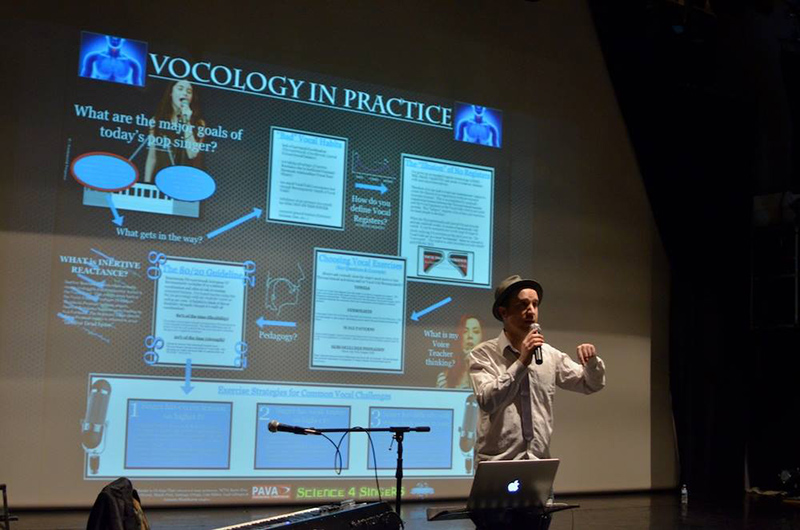
He is the co-founder of Vocology In Practice (www.vocologyinpractice.com), an organization of voice instructors. Through his work with ViP, he has mentored vocal instructors worldwide, including New Zealand, Korea, Switzerland, England and Brazil.
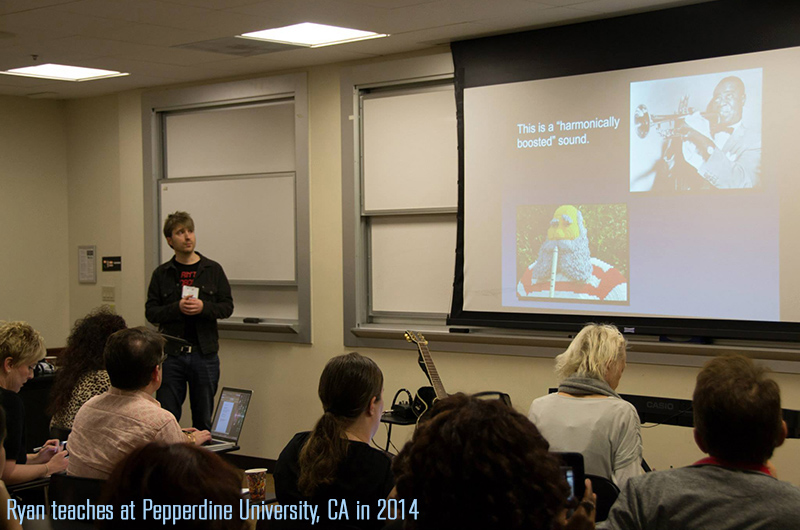
Ryan has lectured internationally, including the prestigious Pepperdine University in California. He is endorsed by some of the most respected vocal experts in the world.
In addition to his work in vocal development, Ryan continues to perform professionally on piano, guitar, bass, drums and vocals.
1. REMOVE EXCESS TENSION
Every singer, at some point in time, will have to deal with excessive muscular tension. One reason it’s so common is that great singing is usually very dramatic. This means that singers have to “live on the edge” and communicate extreme emotion to their audience. It can be very difficult to do this without over engaging the muscles inside and outside of your larynx.
Many of us will try to force the instrument to do our will. As you likely already know, this doesn’t work out very well!


Here is a list of some of the high profile singers that have worked with ViP instructors:
Natasha Bedingfield
Jordin Sparks
Michael Jackson
Demi Lavato
Regina Spektor
Sara Bareilles
A Great Big World
Joss Stone
Adam Lambert
Justin Bieber
Kelly Clarkson
One Direction
Martina McBride
The Weeknd
Cee Lo Green
Ben Folds
Pentatonix


I've been training intensively with Dave since 1998. His work saved my voice from the scrapheap. Through his training, I've developed more than an octave of extra range. My voice is now powerful and, just as importantly, reliable. I used to lose my voice after (and this is no exaggeration) 20 minutes of singing!
As a teacher, I’ve also travelled to Los Angeles to train with him since 2005. He still challenges me to be the best teacher I can be. We spent so many hours in his studio, as I worked with volunteer students. He gave me so much feedback on how to get the best results out of singers quickly, and I still use his advice every day in my studio.

I've been studying closely with Ingo since 2013. He is a brilliant scientist and vocal author with an incredible understanding of the anatomy and acoustics of singing. He's also a singer himself, unlike many voice scientists, so he cares about the voice from a singer's perspective.
My work with him helped me fine tune my understanding and took a lot of the guess work out of teaching. Without understanding difficult concepts such as formants, harmonics, inertive reactance and source-filter interaction, my teaching would not be where it is today.